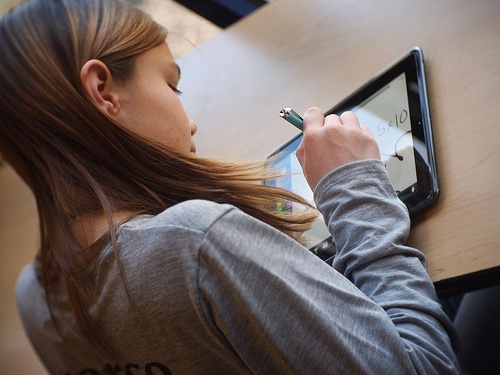
When Dr. Martin Ringle introduced the then-new iPad to Oregon’s Reed
College in the fall of 2010, he was more than a little cautious. After
all, he had seen educational-technology trends come and go—he even had
an old Apple Newton gathering dust in a drawer somewhere.
Ringle, the chief technology officer at Reed, planned to try iPads
purely as a test and not to get caught up in the hype. “We want students
and faculty to have the devices in a live setting,” Ringle said, “and
see what they discover.”
Two years later, after multiple pilot programs, Ringle has this to report: He is an iPad believer.
Pages
▼
Sunday, September 30, 2012
Education Technology Success Story – Carpe Diem Collegiate High School
This exciting institution is one of many success stories that have
been enabled through expertly planned and executed uses of instructional
technologies and other education innovations.
With the new school year off and running, it’s a great time to seek
out and share inspiring stories about education technology successes in
our schools. It’s also been a year since the New York Times kicked off a
series
on the value of education technology investments, and while a lot of
the right questions were examined in those articles,
10 Emerging Education and Instructional Technologies that all Educators Should Know About (2012)
The technologies that can have the best impact on education are evolving quickly from year to year, and the pace seems to be quickening.
Naturally, as author of EmergingEdTech, I’m always keeping an eye out for education and instructional technologies that are emerging from the seemingly endless array of tools and concepts that are out there – which applications and ideas are rising to the fore and best positioned to enhance engagement and impact learning? This year I’ve also been working with constituents at The College of Westchester to develop a Strategic Technology Plan for the next 3 years, so it’s never been more important for me to be aware of those impactful education technologies and concepts that are on the horizon or are already in use and pulling ahead of the pack.How Are iPads Changing Education?
Do you use Apple’s iPad for educational purposes, one-on-one and/or
in the classroom? How do they help students learn better, and/or help
you teach better? What do you do with them that you couldn’t do with
other tools, like a chalkboard or a laptop?In the roughly two years since the iPad was first released, Apple has sold about 65 million of them! Perhaps no other product of any kind – let alone something costing 400 US dollars – has sold so many units so quickly.
The Problem with Design Education
Peter Belanger
Design—central to successful technologies—is too isolated from science education, argues design guru Don Norman.
University industrial design programs are usually cloistered in schools of art or architecture, and students in such programs are rarely required to study science or technology. That bothers Don Norman, former head of research at Apple and an advocate of user-friendly design. Having traditional design skills—in traditional artistic pursuits like drawing and modeling—isn't enough, he says, because the creators of good products and services also must have a working knowledge of everything from the technical underpinnings of microprocessors and programming to the policy aspects of information security.
The Crisis in Higher Education
Online versions of college
courses are attracting hundreds of thousands of students, millions of
dollars in funding, and accolades from university administrators. Is
this a fad, or is higher education about to get the overhaul it needs?
Nicholas Carr
Saturday, September 29, 2012
Infographic on Technology in the Classroom - What Teachers Want

Friday, September 28, 2012
3 Reasons Why Linear E-Learning May Be the Best Solution
It would be cool if every course we build was highly interactive with decision-making branches. But the reality is that not all elearning courses need to be that way.
Despite the complaints we hear about linear, click-and-read courses, there are plenty of times when linear is the best solution. This isn’t a defense of bad elearning (that often is linear). Instead it’s an acknowledgement that there’s a place for linear content.
12 EdTech Tools to Know and Use This Year 2012
Free online resources offer options for integrating technology in the classroom.
I am a big believer in routines. My first task each morning,
after I sit down at my computer and settle in for the day, is to scour
my favorite education blogs and websites for information that I think
our readers might find useful.
Wednesday, September 26, 2012
iPads (and tablets) in K12 - When will we get it together?
Summary: An interview with John Martellaro over at the Mac Observer got me thinking...why can't we get this right?
By Christopher Dawson for ZDNet Education
Earlier this week, I had the pleasure of talking with John Martellaro over at the Mac Observer. He had written an article a couple weeks ago about "The Real Reason Apple Wants a 7-inch iPad" which, in part, inspired my own post on the new Kindle Fire HD and its inability to change the game in education.
My problem with tablets in education has, for the relatively short time
tablets and e-readers have been floating around, always been one of
ecosystem (or the lack thereof).
Tuesday, September 25, 2012
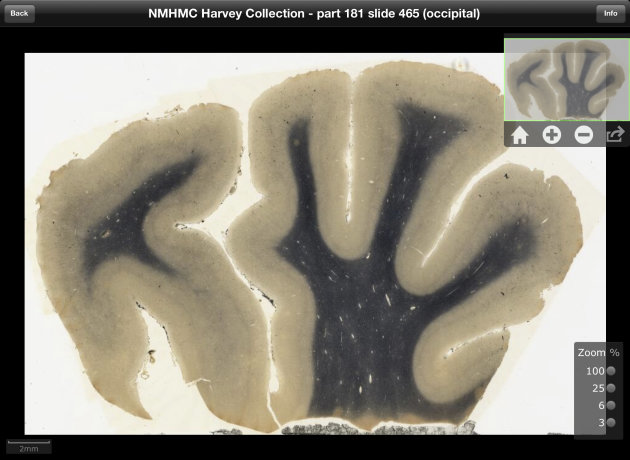
Einstein’s brain is now an interactive iPad app
The brain that revolutionized physics now can be downloaded as an app for $9.99. But it won't help you win at Angry Birds.
While Albert Einstein's genius isn't included, an exclusive iPad
application launched Tuesday promises to make detailed images of his
brain more accessible to scientists than ever before. Teachers, students
and anyone who's curious also can get a look.
A medical museum under development in Chicago obtained funding to scan and digitize nearly 350 fragile and priceless slides made from slices of Einstein's brain after his death in 1955. The application will allow researchers and novices to peer into the eccentric Nobel winner's brain as if they were looking through a microscope.
8 Amazing Ways Google Glasses Will Change Education
Education
is already seeing some major changes in light of new, cutting-edge
technologies. Students can now access educational information from
virtually anywhere at any time, and mobile devices are influencing some
to flip their classrooms, changing the educational experience
altogether. While current technologies are making waves, further changes
linked to upcoming technologies may be on the horizon.
Monday, September 24, 2012
History of Educational Technology
There is no written evidence which can tell us exactly who has
coined the phrase educational technology. Different educationists,
scientists and philosophers at different time intervals have put
forwarded different definitions of Educational Technology. Educational
technology is a multifaceted and integrated process involving people,
procedure, ideas, devices, and organization, where technology from
different fields of science is borrowed as per the need and requirement
of education for implementing, evaluating, and managing solutions to
those problems involved in all aspects of human learning.
Educational technology, broadly speaking, has passed through five stages.
50 Education Technology Tools Every Teacher Should Know About
Technology
and education are pretty intertwined these days and nearly every
teacher has a few favorite tech tools that make doing his or her job and
connecting with students a little bit easier and more fun for all
involved.Yet as with anything related to technology, new tools are hitting the market constantly and older ones rising to prominence, broadening their scope, or just adding new features that make them better matches for education, which can make it hard to keep up with the newest and most useful tools even for the most tech-savvy teachers.
Sweden’s Newest School System Has No Classrooms
Architect Rosan Bosch
designed the school to encourage both independent and collaborative
work such as group projects and PBL. Even the furniture is meant to get
students learning. Bosch says each piece is meant to “aid students in
engaging” while working.There’s a whole new classroom model and it’s a sight to behold. The newest school system in Sweden look more like the hallways of Google or Pixar and less like a brick-and-mortar school you’d typically see.
How Students Can Create Their Own e-Textbooks On An iPad
Two of the most powerful apps on the iPad may be completely
invisible: iBooks and the Camera Roll. However, when used together, they
have the potential to create powerful learning experiences and dynamic
projects.Dynamic Math Portfolios
In July, Greg Kulowiec and I taught a workshop on Creating Digital Course Content. One of our participants, a high school math teacher, initially set out to create his own textbook. However, as we started exploring BookCreator, he realized that the real value may be in the students creating their own collection of books over the course of the year.How An Amsterdam School Uses Facebook Timeline In History Classes
Facebook, despite its massive size, is one of the least talked about
social media tools in the education technology world. But a high school
class in Amsterdam has started using it for educational purposes and you
can check out the hard work they’ve done!Students at Het 4e Gymnasium Amsterdam have had their history class infused into their digital lives thanks to school principal Hans Verhage and the creative agency THEY.
The Flipped Classroom
The Flipped Classroom is an interesting concept in blended learning,
focussing on literally 'flipping' the traditional model of education...
As Karl Fisch identified, regular homework requiring students to apply theory to problems/activities, highlights three groups;
Saturday, September 22, 2012
Educational Resources debuts LearnPad
Educational Resources® (“ER™”) is releasing the LearnPad™ tablet solution to the US market.
The LearnPad™ is a customized school-based tablet solution that supports a wide range of curriculum resources, including tablet “apps”, websites and Flash-based learning content. It contains easy-to-use tools expressly designed to support effective teaching with out-of-the-box utility.
“Contrast the LearnPad™ with various brands’ consumer tablets, and it is easy to see they are overtly lacking any embedded instructional utility. The LearnPad™ addresses rather than over-simplifies everyday school challenges.” says Kevin Shupenia, VP of Tablet Solutions for Educational Resources®.
Wednesday, September 19, 2012
New technologies for schools: September 2012
A new way to measure the color brightness of projectors, a messaging
service that could boost parent engagement in their children’s lessons,
and math software that targets “perceptual learning” are among the
latest ed-tech tools described in the September 2012 edition of eSchool News.
Our September edition is now available in digital format on our website. You can browse the full publication here, or click on any of the headlines below to read these highlights:
Monday, September 17, 2012
Tablets, laptops and mobiles in the classroom: top tips from teachers

Tablets, laptops and mobiles aren't there to replace traditional teaching tools, but designed to complement them. Our panel of education experts share advice on using one to one devices in schools .
This week we've been exploring how technology is being used to educate and engage in the classroom and our piece on using mobile phones in the classroom caused quite the stir, attracting comments from enthusiasts, skeptics and those teachers in between.
Wednesday, September 12, 2012
Intro to Online Course Design
"Design is not just what it looks like and feels like. Design is how it works." — Steve Jobs
As an online instructor, you may find yourself involved in numerous roles related to online course design. Whether you are responsible for the conversion or adaptation of a traditional course for online delivery, assigned to teach courses that were previously designed and developed by others, or relied on for content expertise as a member of a design and development team, your understanding of the online course design process is crucial to the development of an effective learning environment for future students.
Sunday, September 9, 2012
Teaching With Tablets
Tablets can be used for much more than playing games and reading the latest e-books. Learn more about how tablets are also changing the face of education.
Friday, September 7, 2012
How to Make Your Own Infographics
Website provides 10 tools for educators to make shareable online graphs and diagrams.
Of all the content we post to this site, infographics, without fail, get the most love from our readers.Given the increasingly visual — and, for that matter, social — world in which we live, it’s no wonder that educators and administrators have an affinity for our more colorful, data-driven resources. Infographics are at their best when they combine an interesting topic with clear visuals and statistics to tell a compelling narrative. Consider these examples: