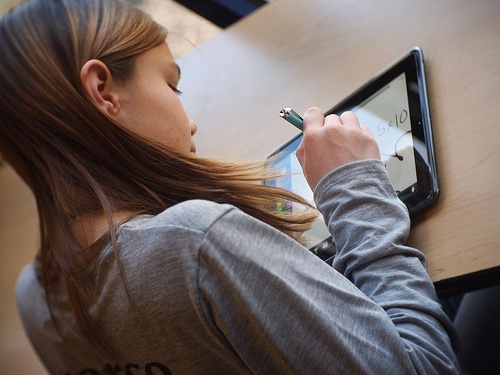
When Dr. Martin Ringle introduced the then-new iPad to Oregon’s Reed
College in the fall of 2010, he was more than a little cautious. After
all, he had seen educational-technology trends come and go—he even had
an old Apple Newton gathering dust in a drawer somewhere.
Ringle, the chief technology officer at Reed, planned to try iPads
purely as a test and not to get caught up in the hype. “We want students
and faculty to have the devices in a live setting,” Ringle said, “and
see what they discover.”
Two years later, after multiple pilot programs, Ringle has this to report: He is an iPad believer.
Sunday, September 30, 2012
Education Technology Success Story – Carpe Diem Collegiate High School
This exciting institution is one of many success stories that have
been enabled through expertly planned and executed uses of instructional
technologies and other education innovations.
With the new school year off and running, it’s a great time to seek
out and share inspiring stories about education technology successes in
our schools. It’s also been a year since the New York Times kicked off a
series
on the value of education technology investments, and while a lot of
the right questions were examined in those articles,
10 Emerging Education and Instructional Technologies that all Educators Should Know About (2012)
The technologies that can have the best impact on education are evolving quickly from year to year, and the pace seems to be quickening.
Naturally, as author of EmergingEdTech, I’m always keeping an eye out for education and instructional technologies that are emerging from the seemingly endless array of tools and concepts that are out there – which applications and ideas are rising to the fore and best positioned to enhance engagement and impact learning? This year I’ve also been working with constituents at The College of Westchester to develop a Strategic Technology Plan for the next 3 years, so it’s never been more important for me to be aware of those impactful education technologies and concepts that are on the horizon or are already in use and pulling ahead of the pack.How Are iPads Changing Education?
Do you use Apple’s iPad for educational purposes, one-on-one and/or
in the classroom? How do they help students learn better, and/or help
you teach better? What do you do with them that you couldn’t do with
other tools, like a chalkboard or a laptop?In the roughly two years since the iPad was first released, Apple has sold about 65 million of them! Perhaps no other product of any kind – let alone something costing 400 US dollars – has sold so many units so quickly.
The Problem with Design Education
Peter Belanger
Design—central to successful technologies—is too isolated from science education, argues design guru Don Norman.
University industrial design programs are usually cloistered in schools of art or architecture, and students in such programs are rarely required to study science or technology. That bothers Don Norman, former head of research at Apple and an advocate of user-friendly design. Having traditional design skills—in traditional artistic pursuits like drawing and modeling—isn't enough, he says, because the creators of good products and services also must have a working knowledge of everything from the technical underpinnings of microprocessors and programming to the policy aspects of information security.
The Crisis in Higher Education
Online versions of college
courses are attracting hundreds of thousands of students, millions of
dollars in funding, and accolades from university administrators. Is
this a fad, or is higher education about to get the overhaul it needs?
Nicholas Carr
Saturday, September 29, 2012
Infographic on Technology in the Classroom - What Teachers Want

Subscribe to:
Posts (Atom)